

When planning your marketing investments, Outdoor Advertising (OOH) can be one of the most visible and unavoidable channels for your brand. However, Outdoor Advertising Budget Calculation goes far beyond simply asking for a billboard or digital screen rental price.
A successful OOH budget requires the integration of strategic objectives, geographic data, media formats, and the flexibility offered by Digital Out-of-Home (DOOH) technologies. Poorly planned budgets either become unnecessarily expensive or fail to reach the target audience with sufficient frequency—resulting in wasted spend.
With the right approach, outdoor advertising guarantees broad reach while maximizing Return on Investment (ROI).
In this comprehensive guide, prepared by HF media, a Turkey-based advertising agency serving international brands, we explore the scientific foundations of outdoor advertising budgeting, the 7 critical cost drivers, and how modern tools such as Programmatic DOOH (pDOOH) can dramatically improve efficiency.
Understanding outdoor advertising budgets requires familiarity with traditional OOH metrics. These metrics form the foundation of every professional media planning discussion.
GRP measures the total exposure delivered to a target audience during a campaign. Most OOH budgets are designed to achieve a specific GRP level.
GRP = Reach (%) × Frequency (Average Number of Views)
CPM has become one of the most critical efficiency metrics in both OOH and DOOH advertising.
CPM = Total Campaign Cost / (Total Impressions ÷ 1,000)
A key budgeting decision is whether to reach many people fewer times or fewer people more frequently:
High Reach: Ideal for launches and short-term announcements
High Frequency: Ideal for brand recall and long-term awareness
Every outdoor advertising budget must be analyzed through these cost-defining variables:
Budgets should be built around strategy—not price lists.
This is the most strategic and professional approach used by agencies like HF media:
Define required tasks
20 A+ pedestrian CLPs
5 arterial megaboards
30 metro DOOH screens
Calculate individual costs
Approve total outdoor advertising budget
A fixed percentage (e.g. 10–25%) of the total marketing budget is allocated to OOH.
Budgets are aligned with competitor spending benchmarks.
Risk: You may replicate competitors’ strategic mistakes.
| Campaign Goal | Media Focus | Budget Purpose |
|---|---|---|
| Product Launch | Billboard & Megaboard | Rapid geographic reach |
| Brand Prestige | Building Wraps & Premium DOOH | Iconic, high-impact visibility |
| Retail Traffic | CLP & Digital Kiosk | Proximity-driven conversions |
| Measurement & Flexibility | Programmatic DOOH | Real-time optimization & ROI proof |
With pDOOH, you don’t buy screens—you buy audience presence.
Outdoor Advertising Budget Calculation is a complex equation—but its core principle is simple: reach the right audience, at the right frequency, for the lowest possible cost.
With DOOH and Programmatic buying models, outdoor advertising is now a fully measurable ROI-driven investment.
As a Turkey-based advertising agency, HF media designs outdoor advertising budgets based on brand objectives, GRP needs, and pDOOH potential—not static price lists.
Contact HF media today to calculate your Outdoor Advertising Budget, select the right media mix, and maximize ROI in Turkey and international markets.
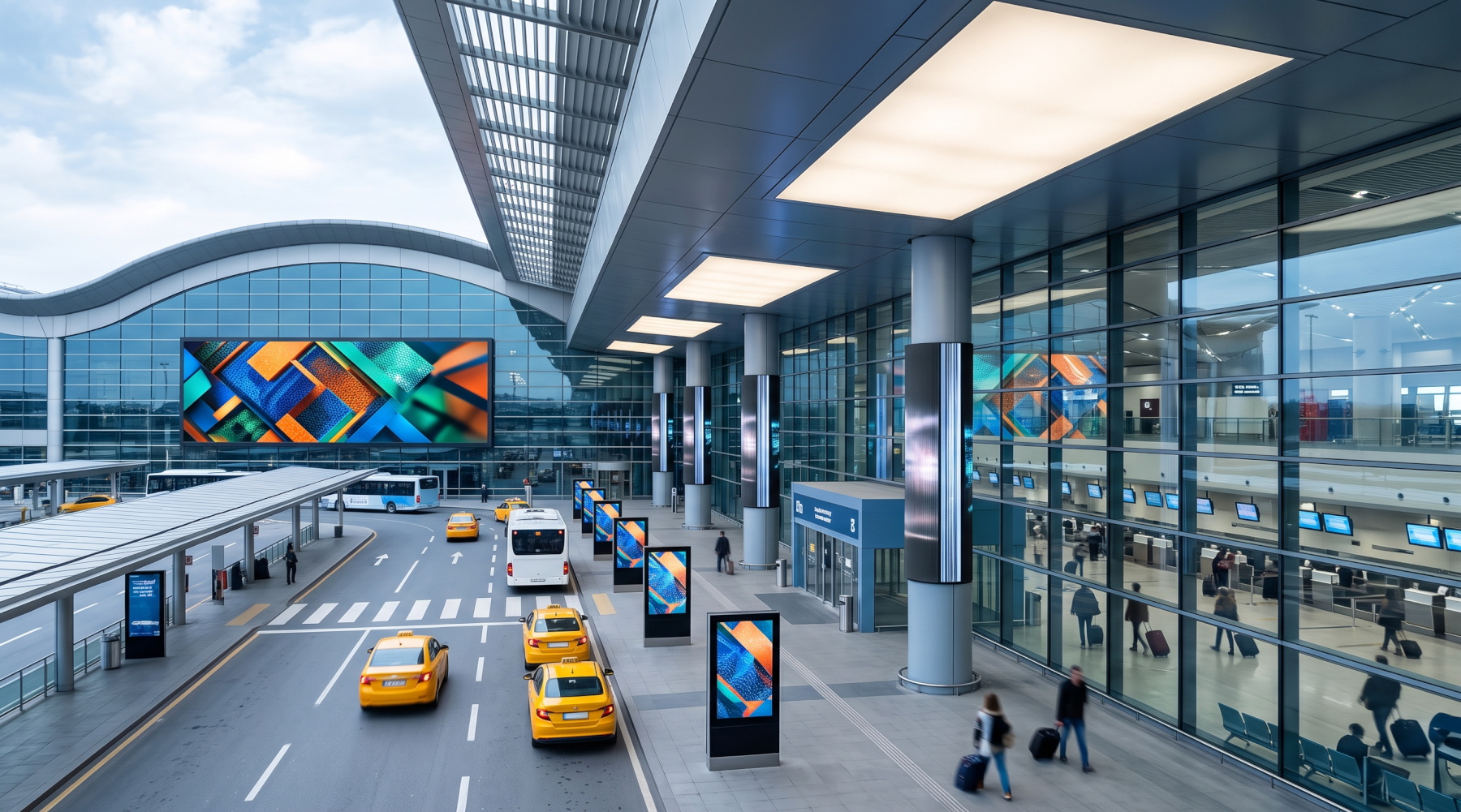


Reach local and international travelers with Sabiha Gokcen Airport advertising. LED screens, digital CLP, lightboxes, terminal media and more by HF media.
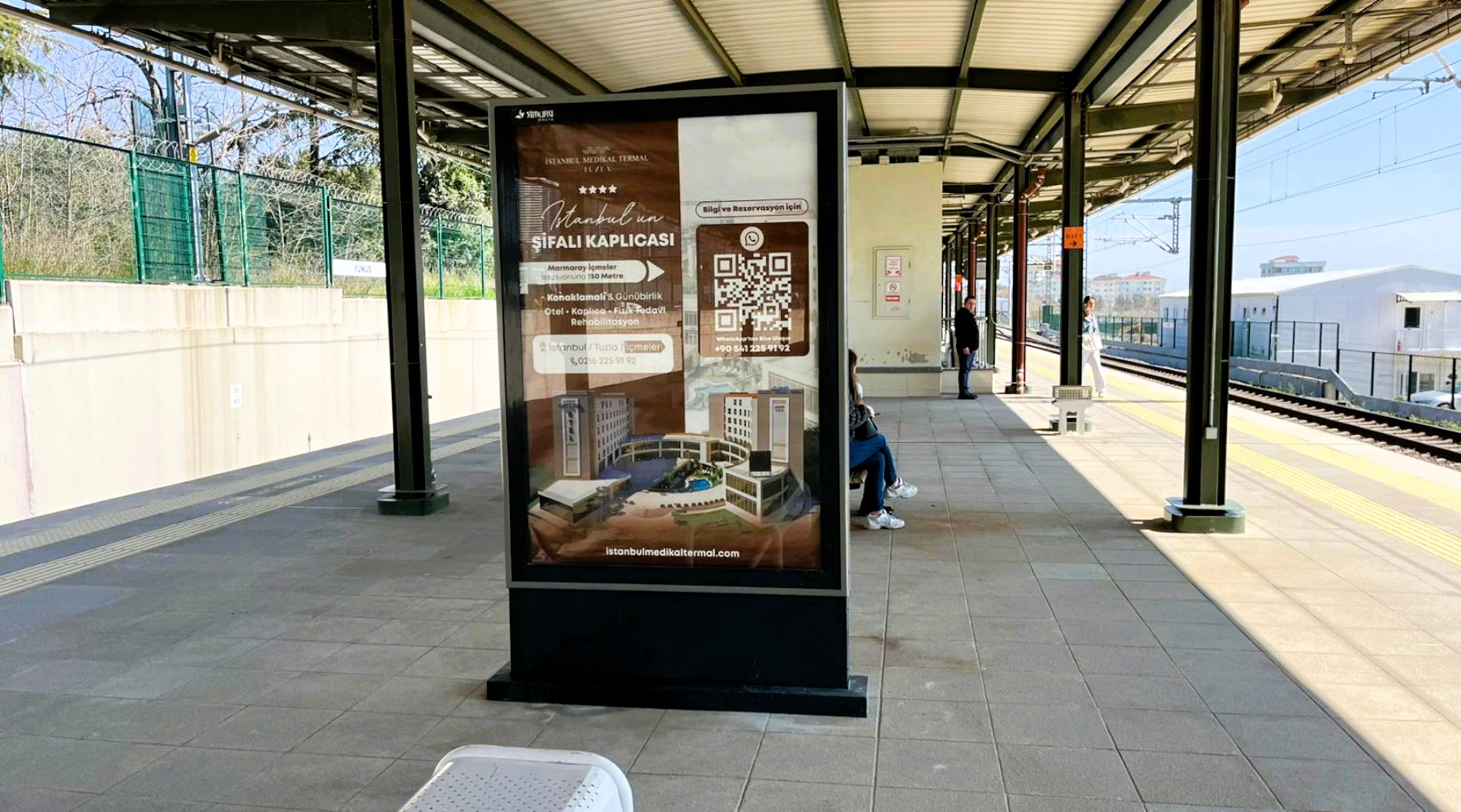
Discover HF media’s Marmaray CLP advertising campaign for Istanbul Medikal Thermal Hotel, featuring 200 advertising locations from Gebze to Halkalı and delivering strong brand visibility across Istanbul.
Discover the development process of Hexagon ISO Software, a web-based quality management system developed by HF media. Learn about requirements analysis, UX design, modular architecture, software development, and quality assurance.